- This event has passed.
Seminar on Saturday, September 15, 2012
September 15, 2012 @ 12:00 pm - 1:00 pm

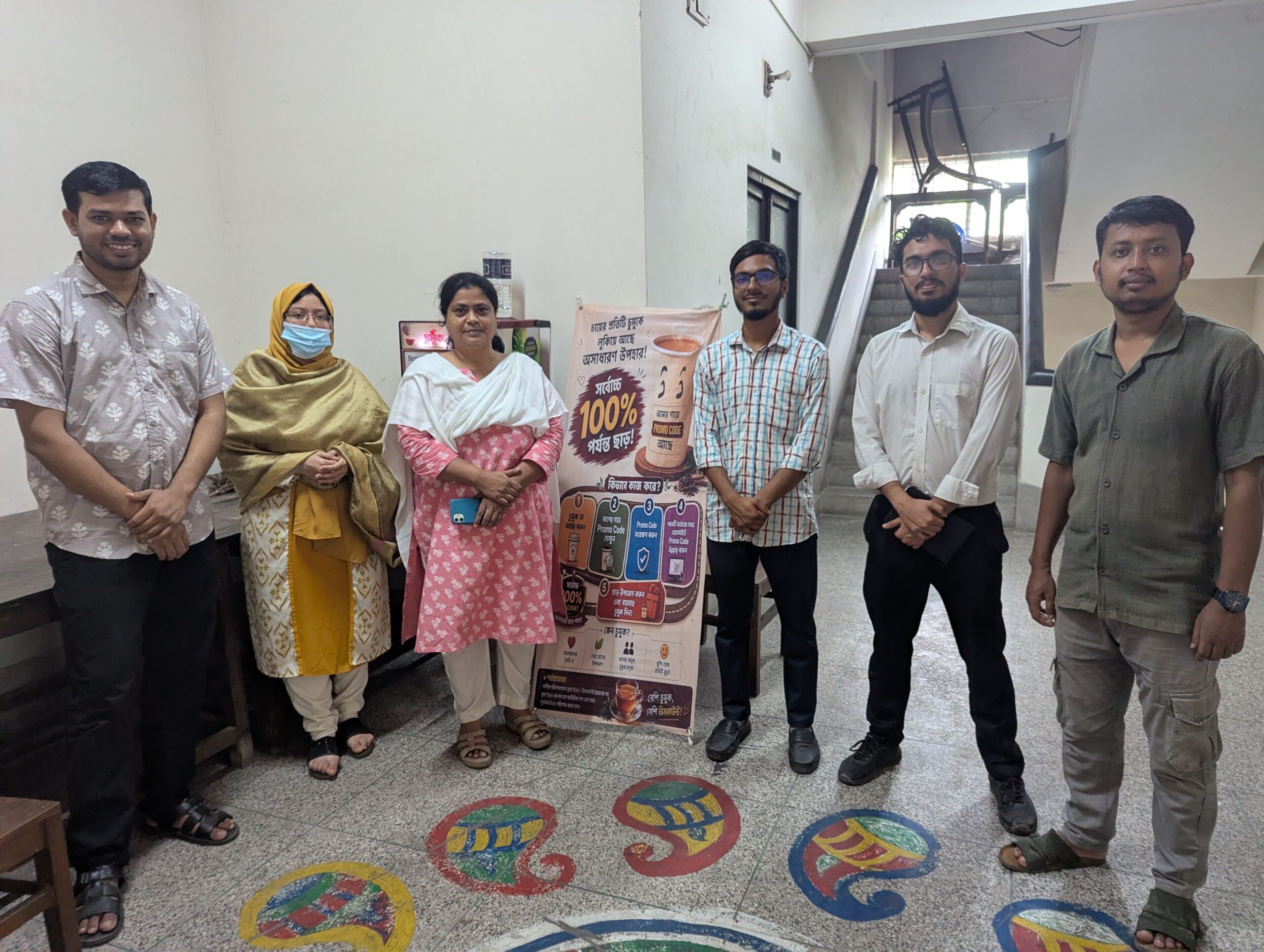
The Institute of Applied Statistics and Data Science (IASDS) is pleased to announce the installation of a new tea and coffee vending machine on the 4th floor, providing students, faculty, ... [ Read More ]
The University of Dhaka Senate, at its meeting held on 29 June 2026, formally approved the renaming of the Institute of Statistical Research and Training (ISRT) to the Institute of ... [ Read More ]
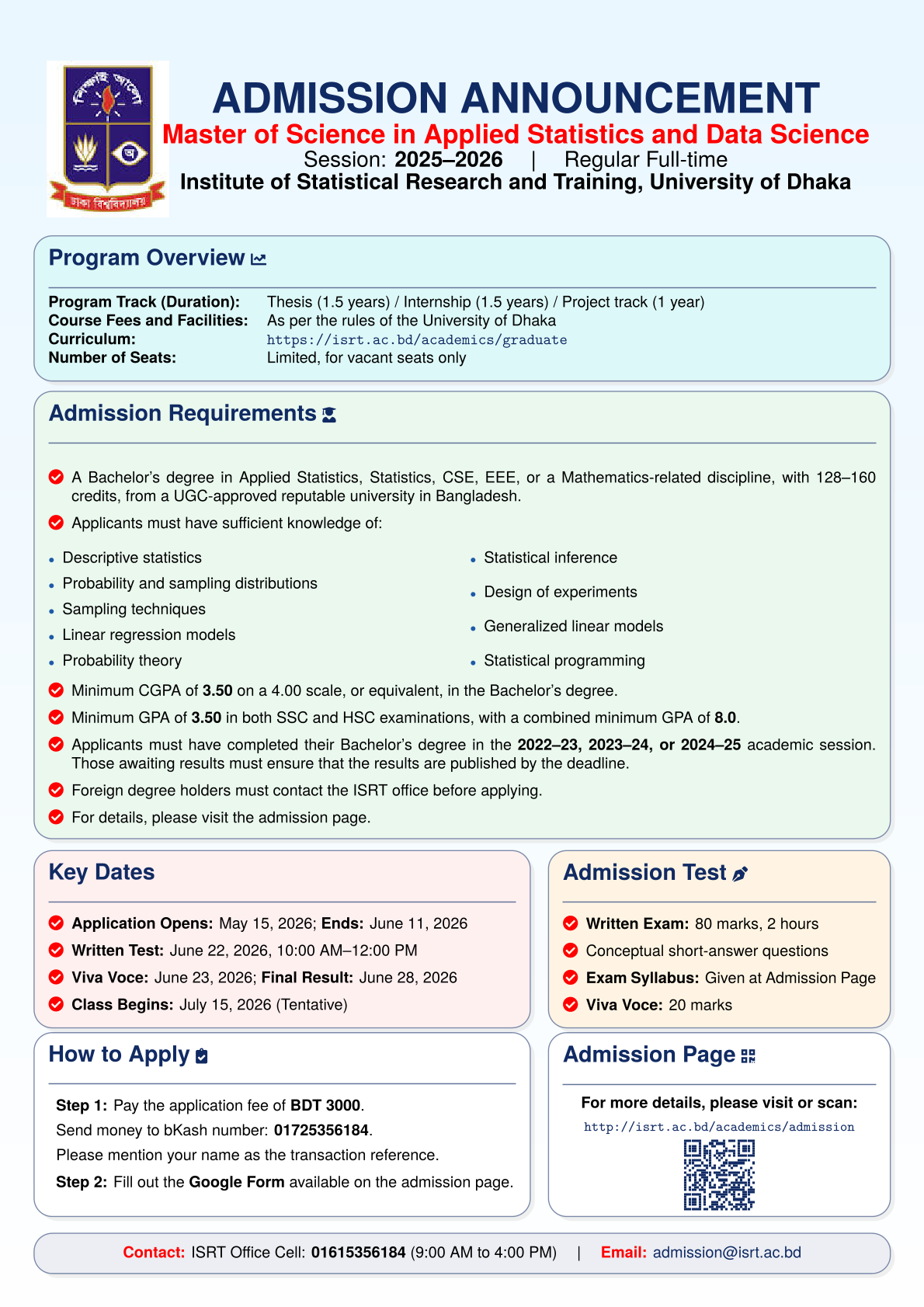
The Institute of Statistical Research and Training (ISRT), University of Dhaka, has extended the application deadline for admission to its MSc in Applied Statistics and Data Science (Regular Full-time) program ... [ Read More ]
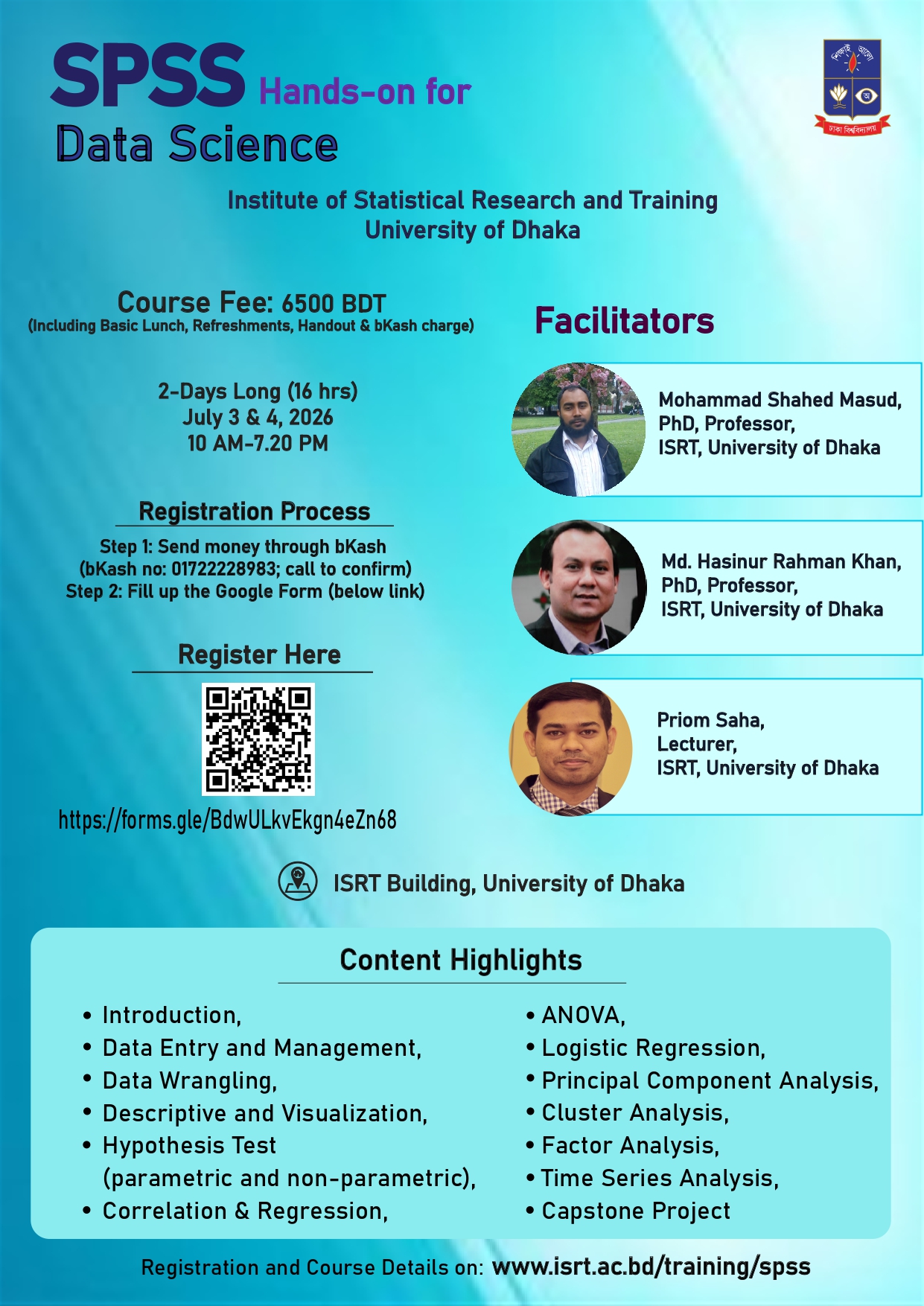
The Institute of Statistical Research and Training (ISRT), University of Dhaka, is pleased to announce a two-day intensive training course titled “SPSS Hands-on for Data Science”, designed to provide participants ... [ Read More ]
The Institute of Statistical Research and Training (ISRT), University of Dhaka, is pleased to announce admissions for the Master of Science in Applied Statistics and Data Science program for the ... [ Read More ]

Director,
Institute of Applied Statistics
and Data Science (IASDS)
University of Dhaka
Dhaka 1000, Bangladesh